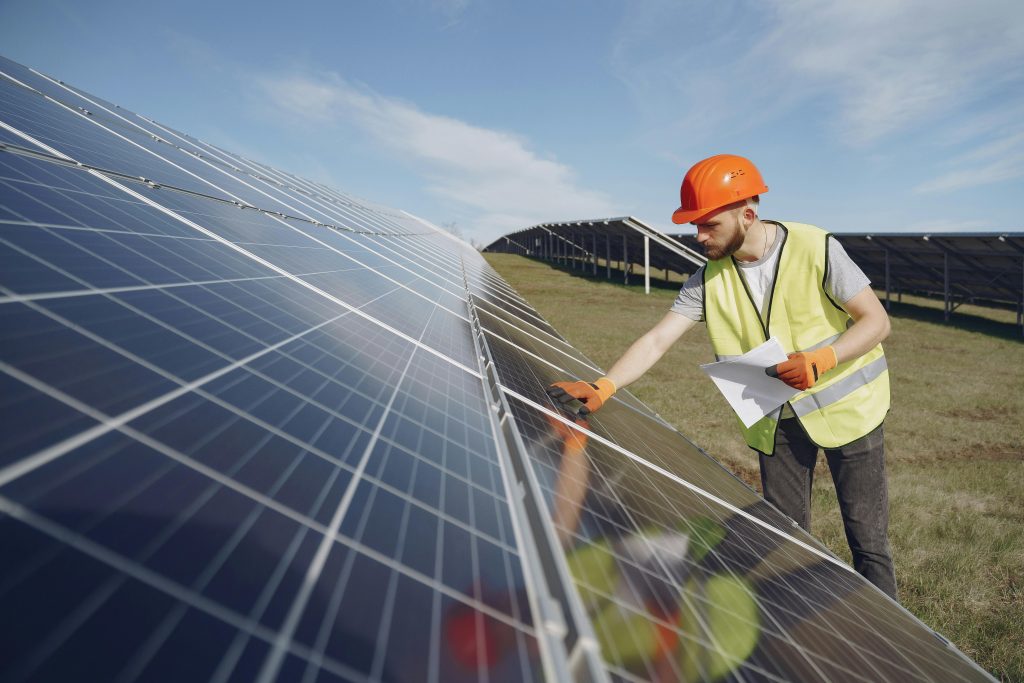
Construction processes in large-scale energy projects go far beyond simple equipment installation. From site preparation to grid connection, this process requires advanced engineering planning, strong site organization, and seamless coordination across multiple disciplines.
The construction process of an energy project is directly linked to accurate planning, site-specific engineering solutions, and effective execution management.
In this article, we explore how an energy project is brought to life in the field, covering all stages from infrastructure to grid connection.
1. Site Preparation and Infrastructure Works
The construction process in energy projects begins with site preparation. The topography, soil conditions, and accessibility of the land form the foundation of the entire project.
Key activities at this stage include:
- Geotechnical surveys and soil analysis
- Earthworks (cut and fill operations)
- Development of site access roads
- Drainage and stormwater management
In challenging regions such as Central Asia and Africa, site preparation can become one of the most critical and time-consuming phases of the project. For a deeper insight, you can explore our article:
”Energy Projects in Challenging Regions: The Reality of Development in Central Asia and Africa ”
2. Structural and Mechanical Installation Processes
Once the infrastructure is completed, the installation of energy generation equipment begins. In solar energy projects, this phase typically starts with the assembly of structural systems.
Main steps include:
- Installation of steel structures or tracker systems
- Solar panel installation
- Placement of cable trays and support systems
At this stage, maintaining the balance between speed and quality is crucial. Installation errors can lead to long-term efficiency losses in energy production.
3. Electrical Infrastructure and System Integration
Electrical infrastructure forms the core of the construction process in energy projects.
This phase includes:
- DC cabling and string connections
- Inverter installation
- Construction of transformer substations
- Integration of SCADA and monitoring systems
Ensuring all systems operate in harmony is essential for continuous and efficient energy production.
4. Testing, Commissioning and Quality Control
One of the most sensitive stages of the construction process is commissioning.
This phase involves:
- Insulation and performance testing
- System synchronization
- Safety inspections
- Provisional and final acceptance tests
This stage ensures that the project is not only operational but also performs according to design specifications.
5. Grid Connection and Energy Transmission
The final step in the construction process is delivering the generated energy to the grid.
This stage includes:
- High-voltage (HV) line connections
- Coordination with grid operators
- Synchronization and energization
- Transition to commercial operation
Grid connection is a critical phase not only technically but also in terms of regulatory compliance.
Conclusion: The Importance of an Integrated Construction Approach
The success of an energy project depends not only on equipment quality but also on the integrated management of engineering, procurement, and construction processes.
The EPC approach enables projects to be completed on time, within budget, and in a sustainable manner.
At KCE Group, we manage large-scale energy projects end-to-end with our field experience, delivering reliable and efficient solutions across different geographies.